


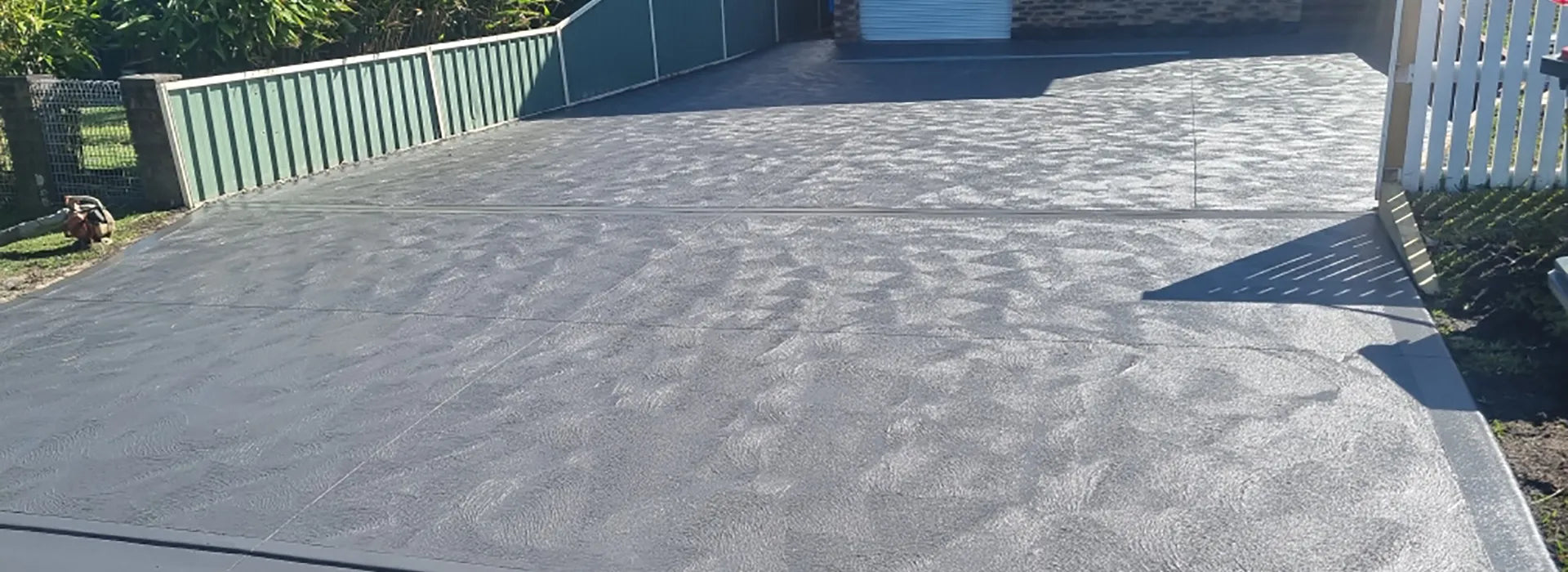
It is the first question most people ask, and the honest answer is that it depends on your block. Two driveways of the same size can be priced quite differently once you factor in access, slope, the old surface and the finish you choose. Here is what drives the price, so you know what to expect when the quotes come in.
How concreters price a driveway
Most driveways are priced on the area in square metres, plus any extras the site needs. The base rate covers the concrete, reinforcement, formwork, labour and a standard finish. Then things like excavation, removing an old driveway, a concrete pump or a decorative finish are added on top. That is why a quote over the phone is only ever a rough guide. A proper quote needs someone to look at the site.
The main things that affect the cost
1. Size and shape
Bigger driveways cost more overall, but the price per square metre usually comes down as the area goes up. Curves, splays and odd shapes take more formwork and finishing time than a straight run.
2. Removing the old driveway
Breaking out old concrete, pavers or asphalt adds labour, machine time and tip fees. If your current driveway is sound, it is worth asking whether a clean and reseal or a spray-on resurface would do the job for less.
3. Excavation and base prep
The base under the concrete is what makes a driveway last. On the Coast that can mean cutting into sandstone around Gosford, compacting sandy ground on the Peninsula, or dealing with reactive clay around Wyong. The more cut, fill and compaction your site needs, the more the job costs. We do our own excavation and bobcat work, which keeps this part efficient.
4. Access
If the concrete truck can back up to the pour, it is straightforward. If it can't, because of a steep block, a narrow side path or a long backyard run, we bring in a concrete pump. That adds to the cost but saves time and protects your garden.
5. Slope and drainage
Steep driveways need careful setting out, sometimes steps or transitions, and a finish with good grip. Every driveway also needs the right falls to move water away from the house, and some need grates or a stormwater connection.
6. Thickness and reinforcement
A standard driveway suits everyday cars. If you park a caravan, boat, truck or heavy 4WD, the slab may need to be thicker with heavier reinforcement.
7. The finish
The finish makes a real difference to the price. As a general guide, from most to least economical:
- Plain concrete with a broom or trowel finish
- Coloured concrete, with colour mixed through
- Exposed aggregate, stencilled and stamped finishes, which need more labour and materials
Our guide to choosing a driveway finish goes through the pros and cons of each.
8. Sealing
Sealing is an extra step, but it protects the surface from oil, salt and UV and keeps decorative finishes looking good. It is strongly recommended for exposed aggregate and coloured concrete.
9. Council requirements
The section of driveway between your boundary and the road, called the driveway crossing or layback, may need Central Coast Council approval and has to be built to council specifications. Ask whether your quote includes it.
How to get the best value
- Get two or three quotes, and make sure they cover the same scope: removal, excavation, thickness, reinforcement, finish and sealing.
- Ask what is included. A cheap quote that leaves out removal, pumping or sealing can end up costing more.
- Do it all at once. Adding paths, a patio or a parking pad while the crew and equipment are on site is usually cheaper than coming back later.
- Choose a finish for the long term. A slightly dearer finish that hides wear and lasts longer can be better value over 20 years.
- Check licensing and insurance. In NSW, residential concreting work over $5,000 (including GST) needs a licensed contractor.
Get an accurate price for your driveway
The only way to get a real number is a site visit. Troy will come out, measure up, check access, levels and drainage, and give you a clear written quote at no charge. Call 0417 734 005 or request a free quote online.